Archaeology and History
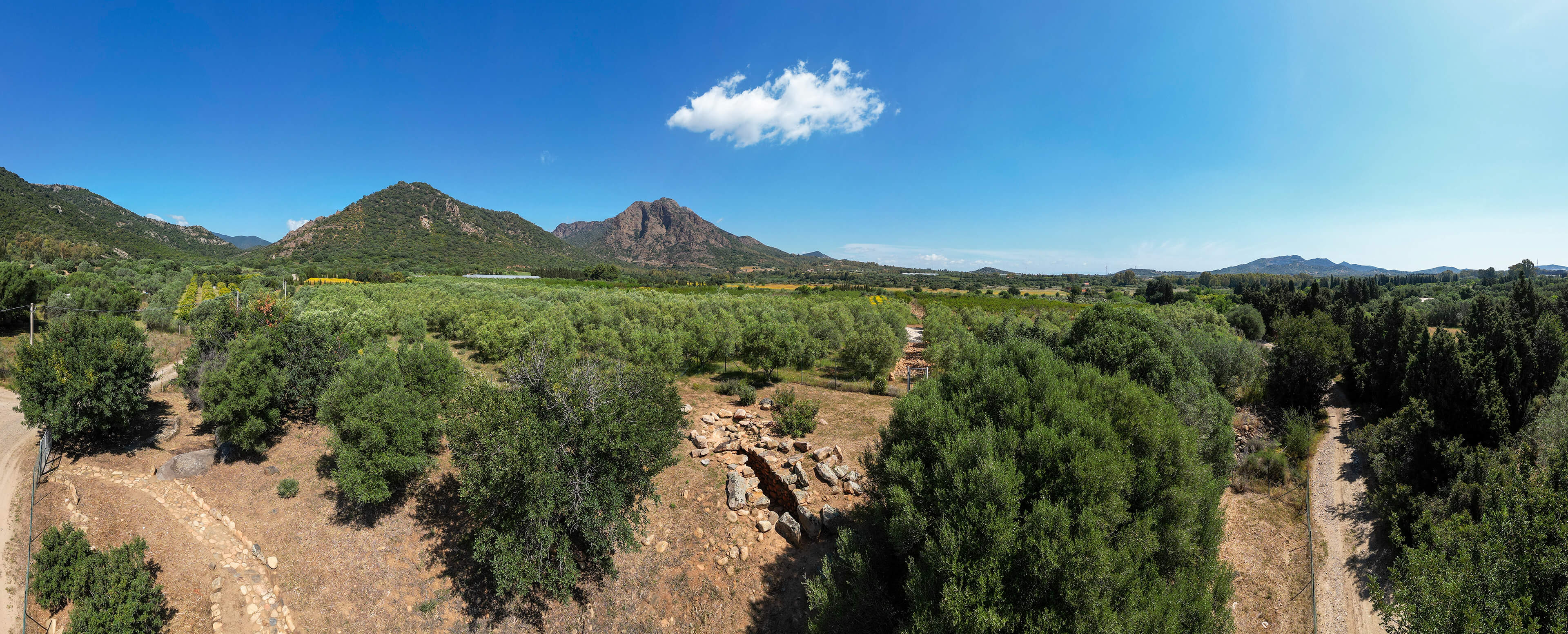
A region rich in millennia of history, with archaeological sites, ancient churches, museums, and landmarks that tell the story of distant civilizations.
A region rich in millennia of history, with archaeological sites, ancient churches, museums, and landmarks that tell the story of distant civilizations.

The remains of the acropolis of Bithia stand on top of a promontory between the beach of Su Portu and that of Sa Colonia.

The islet of Su Cardolinu (in Sardinian: the mushroom) lies about 300 metres from the beach of Su Portu, around Chia (Domus de Maria).

The locality known as 'Sa Punta' is located in the south-western coastal periphery of the municipality of Sarroch, at the southern end of the coast of Sardinia.

A late 19th century building in the central Piazza Vittorio Emanuele, in Domus de Maria.

In a cove on the eastern edge of the Gulf of Teulada, at Capo Spartivento in the protected natural area of Chia, stands the lighthouse of the same name, one of the oldest in Italy and still in operation.

Nora is currently one of the most important and most visited archaeological sites on the island.
For the last decade, early September has brought the annual appointment with Note di Settembre (September Notes), an archaeological event celebrating the amazing heritage of Domus de Maria.

In the north-eastern part of the municipal territory of Sarroch, on the summit of a hill of volcanic origin called Antigori, stands the nuraghe of the same name.

The Nuraghe Baccu Idda stands on the top of a granite promontory of modest height (80 metres above sea level) in the northern part of the area around Chia.

Located about 900 metres east of Villa San Pietro, near the administrative boundary with the municipality of Sarroch, the Nuraghe Mereu is undoubtedly one of the most imposing nuraghi in the area.

Standing on the summit of a hill, 107 metres above sea level, the nuraghe was built during the Middle Bronze Age (17th century BC) when the Nuraghic civilisation spread across the island.

Inland, a few kilometres from the coast, are the ruins of an ancient semaphore station dating back to the second half of the 19th century.

On the coast of the territory of Domus de Maria, one can still admire a long stretch of a roadway dating back to Roman times.

Su Casteddu is what remains of a small fortress on top of a hill of volcanic origin on the northern outskirts of the town of Pula.

'Perda 'e Accuzzai' (sharpening stone in Sardinian) is a Giants’ Tomb located on the northwestern outskirts of Villa San Pietro

One can find the Giants’ Tombs of 'Su Lilloni' inside the forest of Gutturu Mannu (in Sardinian: the big gorge) in a fantastic natural setting.

The tower of Budello is located at the mouth of the port of Teulada. Designed for Cagliari entrepreneur Pietro Porta, Work on its construction began in 1601 and was probably completed in 1604.

The Torre del Diavolo (Devil's Tower), also known as 'Turri e su Scolliu' and in the past as 'Sa Torritta', is a watchtower on a promontory between Punta Zavorra and the ancient landing place of Porto Columbu, in the south-eastern area of Sarroch territory.

Located in the southwestern part of the Pula area, the tower was built during the Savoy era, in 1774.

Located on the Capo Malfatano promontory and clearly visible from the coastal road leading to the port of Teulada.

The Tower of Chia stands at the top of a promontory between the beaches of Su Portu and Sa Colonia, where the Punic-Roman city of Bithia once rose.

The tower of San Macario stands on a small island about 500 metres off the coast of Pula, on the highest point of the cliff 15 metres above sea level.

The tower is located on the Coltellazzo promontory, a short distance from the ruins of the city of Nora.

On the coastal stretch of the Municipality of Domus de Maria, on a promontory between Capo Malfatano and Tuerredda, stands the Tower of Piscinnì (or Pixinnì).