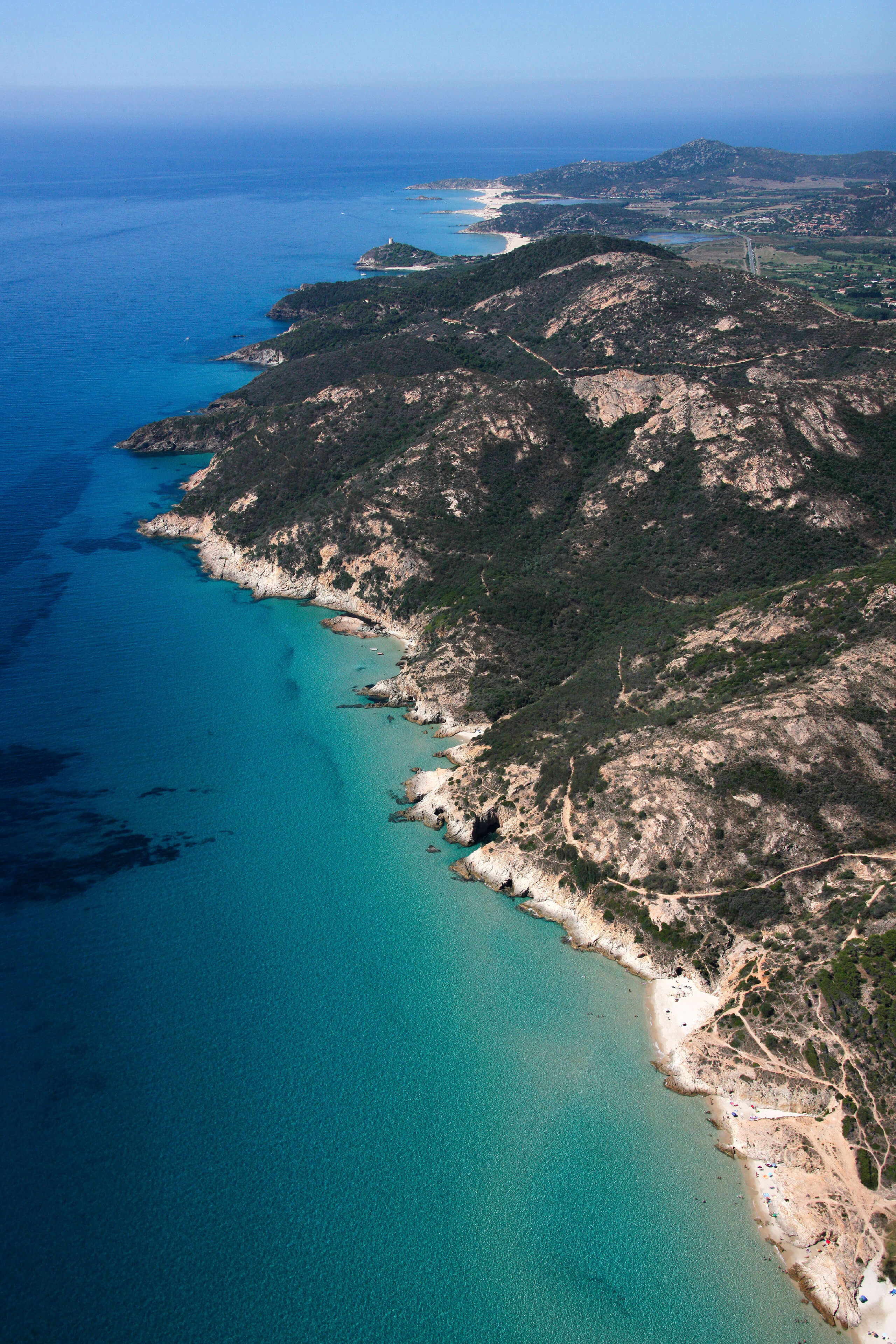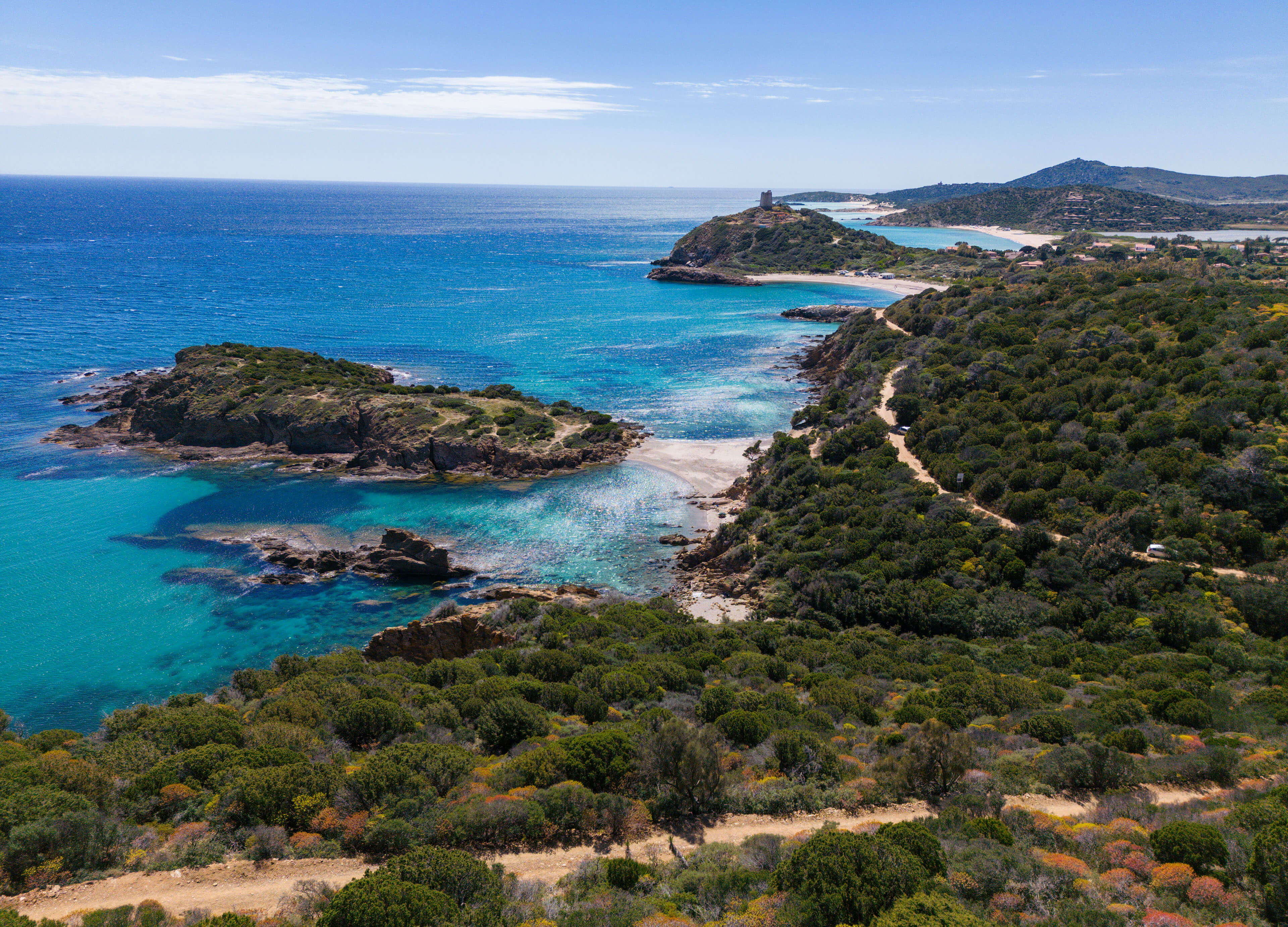
On the coast of the territory of Domus de Maria, one can still admire a long stretch of a roadway dating back to Roman times.
The currently visible and practicable route dates to the 1st century AC and belongs to a consular road called 'Nora-Bithiae'. This connected two of the most important Sardinian cities of Punic and Roman times, namely Nora, in the municipality of Pula, and Bithia, in the municipality of Domus de Maria, both mentioned in the Itinerarium Antonini.
The well-worked stone blocks, in granite and basalt, that made up the roadbed are still visible. It is a path about 3 km long where you can admire the entire coastline alternating between low coastline and high, pinkish-coloured granite cliffs. Along the way, there is also characteristic Mediterranean scrub flora such as juniper, cistus, myrtle and mastic trees that provide perfumes and harmonies of colours to walkers.
The Sardinian roads of the Roman era largely retrace routes already in use in the previous Punic era (6th-3rd century BC). The most important settlements were connected by a very efficient road network. From the 1st century AC onwards, a general plan was made to restructure the main island roads. On the roads of primary importance, polygonal boulder paving was used, while on secondary roads or in the provinces, the route was paved only with gravel and small pebbles of the most common stone in the area.
In Roman times, southern Sardinia road network consisted of two main roads: the so-called Litoranea Occidentale and the Via Interna. The Litoranea Occidentale connected the cities nearby the Gulf of Oristano with Sulci (S. Antioco) and the Iglesiente. The Via interna, called A Karalibus Sulcos, started from the most important city, Karalis (present-day Cagliari) and reached the island of S. Antioco (ancient Sulci)
Strada romana, 09010 Domus de Maria SU, Italia
Accessibility: Good
Map
Does this corner of Sardinia inspire you? DiscoverDomus de Maria
Multimedia