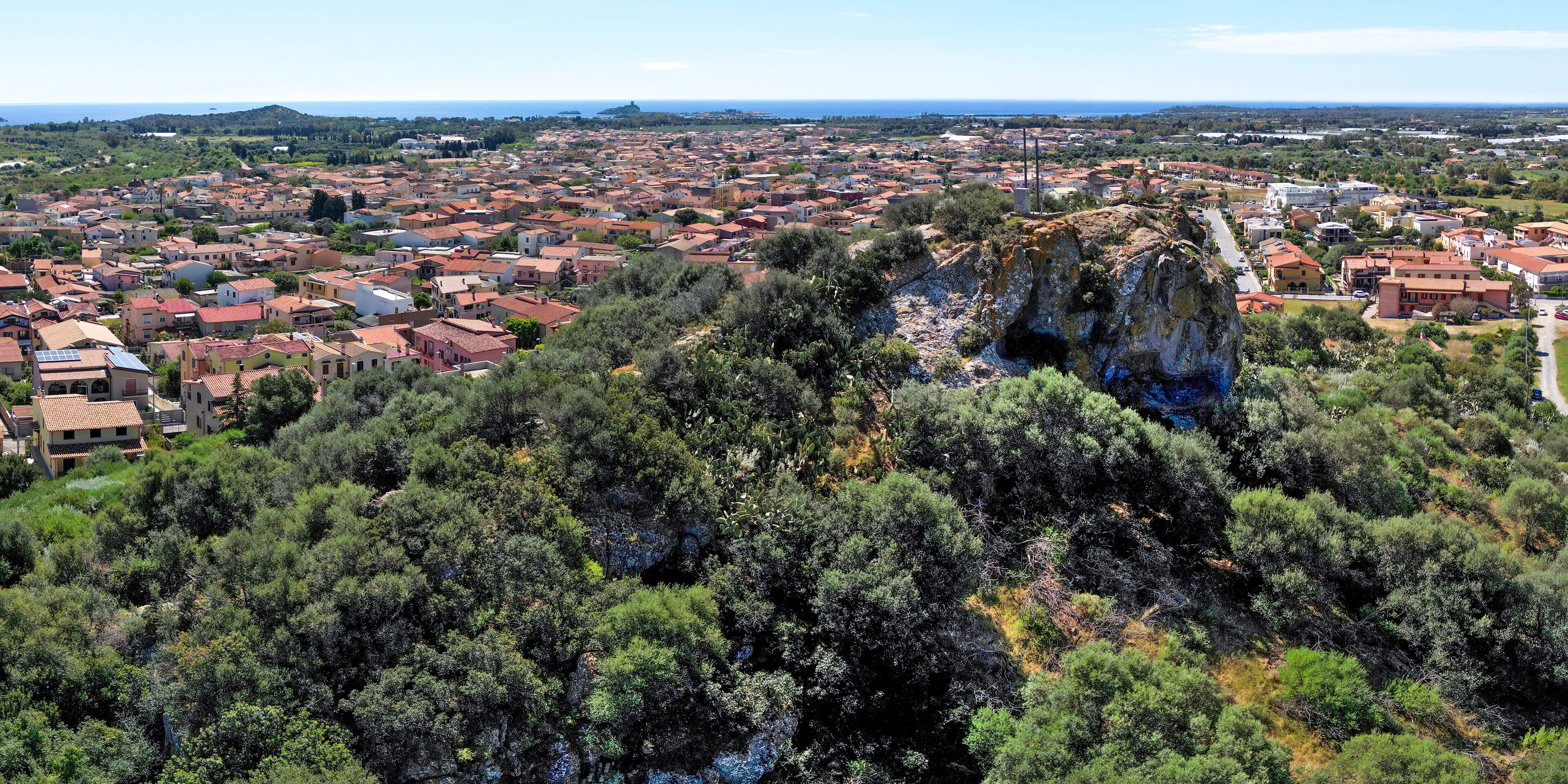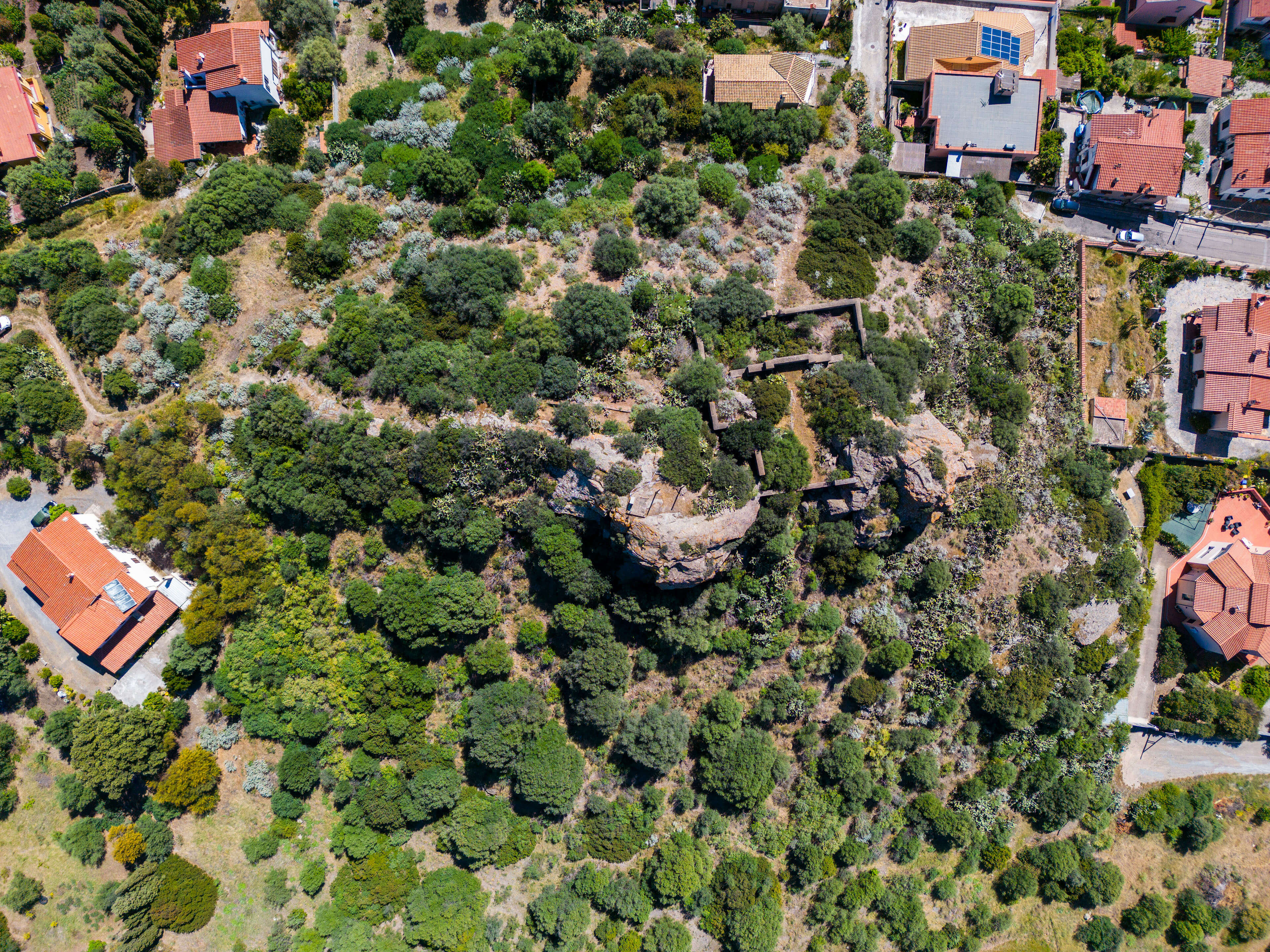
Su Casteddu is what remains of a small fortress on top of a hill of volcanic origin on the northern outskirts of the town of Pula.
Here, archaeologists have found ceramic finds dating back to the Monte Claro Culture (3rd millennium BC) that represent the first human settlements in the area. The locals probably already exploited the high ground to control the fertile surrounding plain at the time.
In the Byzantine era (6th century AC) a small fortress was built to guard the Roman road called 'A Karalibus - Nora', which connected the city of Karales (present-day Cagliari) with that of Nora and was still active at that time. In the Middle Ages, a larger fortress was built over the small one under the Giudicato of Calari in the Curatoria (administrative region) of Nora.
In 1258, the victorious Pisans, allied with the other three Sardinian kingdoms, divided the Giudicato of Càlari among them. The Pisan Gherardesca family took the Curatorie of Sulci, Decimo and Nora, which included Pula, so these territories became their dominion. In 1324, after the conquest by the Catalan-Aragonese army, Pula became part of the Aragonese kingdom of Sardinia. The village of Pula was given as a feud 'more Italie' again to the Gherardesca.
Throughout this period, the fortress continued to be fundamental for the defence of the territory from internal attacks by the Giudicato of Arborea and from Barbary pirates. Made of sandstone blocks and river pebbles, combined with lime mortar, the main building was demolished in the 1930s to make way for a water cistern.
Via Monte Grappa, 30, 09010 Pula CA, Italia
Accessibility: Poor
Map
Does this corner of Sardinia inspire you? DiscoverPula
Multimedia