Territory
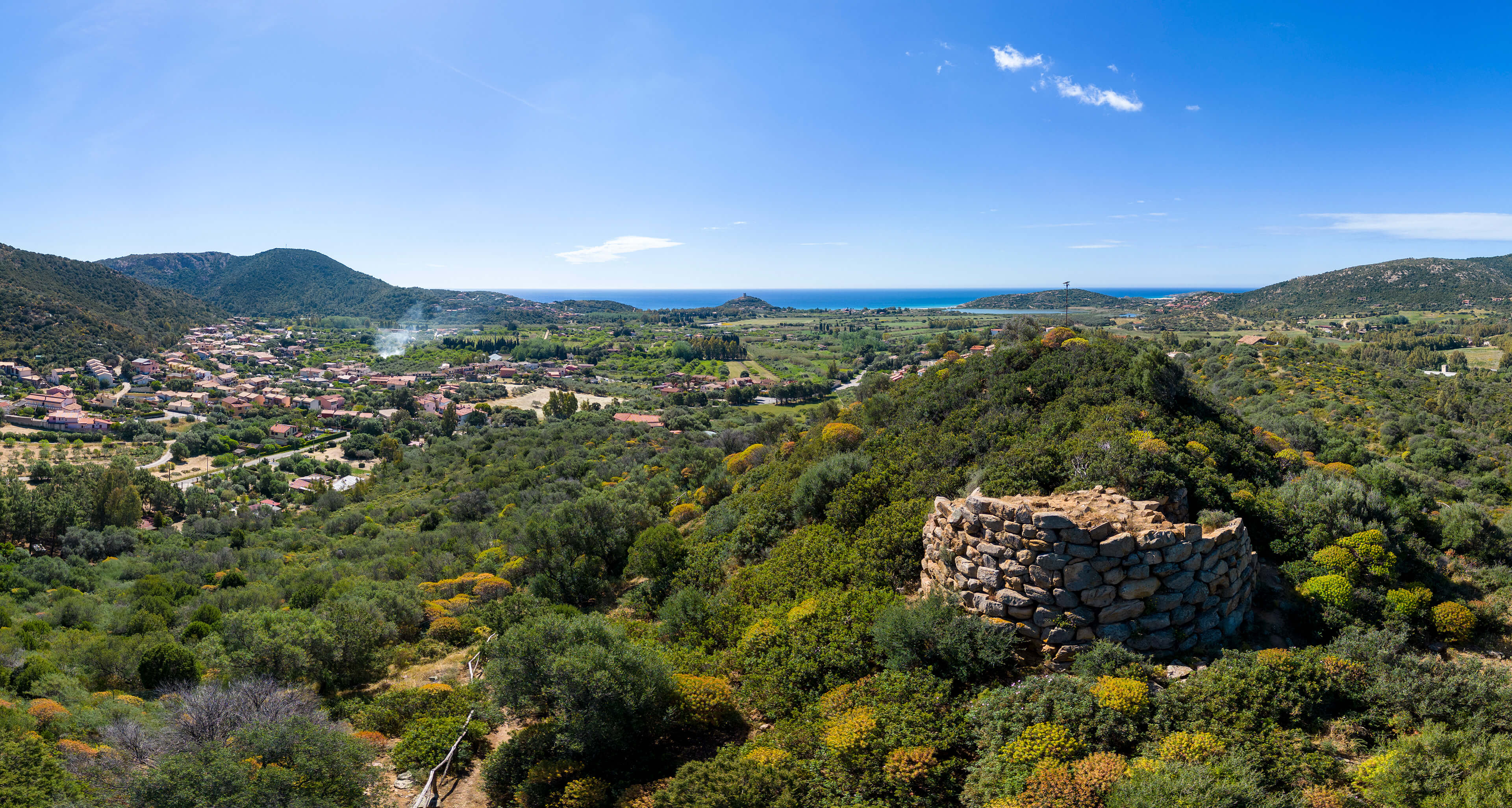
The five towns of Sarroch, Villa San Pietro, Pula, Domus de Maria and Teulada joined forces to create the Union of the Municipalities Nora-Bithia. Together they cover about 400 square kilometres on the southern and southwestern coast of the island.
The first traces of human settlements in the area take us back mainly to the Bronze Age (around 1600-1000 B.C.) when the Nuragic civilisation developed in Sardinia. Dozens of buildings from this era (mainly nuraghi and tombs of the giants) lie in the territories of the five municipalities, such as the nuraghi Sa Domu 'e S'Orcu and Antigori in Sarroch, Sa Perdaia between Domus de Maria and Teulada, and the tomb of Perda 'e Acutzai in Villa San Pietro.
Between the 7th and the 3rd century B.C., during the Punic and Roman periods, the cities of Bithia (Domus de Maria), Tegula (Teulada) and the better-known Nora (Pula) were all major, well-developed settlements. During the Middle Ages, this territory was part of the Kingdom of the Giudicato di Cagliari, more precisely the Curatoria di Nora. After its fall in 1258, the Gherardesca family of Pisan origin annexed the former Curatoria among their possessions.
The era between 1500 and 1600 (known as the Spanish era) saw the construction of most of the towers dotting the coastline today; they were built to protect the towns from the frequent corsair raids from North Africa.
The area is geologically very old, its rocks dating back over 400 million years, and its environment encompasses coastal areas, forests and wetlands. The Union of the Municipalities Nora-Bithia can boast breath-taking landscapes of beaches that alternate with mountain covered in tens of thousands of hectares of virgin forests.